
Vitamin C Face Wash + Serum + Cream: The Right Order and Why It Matters
-
admin
- Posted on
- 0 comments
You got a Vitamin C face wash. Then used a skin lightening serum. Then I grabbed a vitamin C moisturizer. Great choices — but here’s the hard truth: if you’re applying them in the wrong order, you’re leaving most of the results on the table.
Skincare layering is not difficult, but it is precise. How well each Vitamin C product absorbs, how long it remains on your skin, and whether the ingredients actually reach the layers where they do their work are all affected directly by the order in which you layer them.
This guide explains the right order, the science behind it, and why each step in a Vitamin C skin-care routine is important — especially if you’re looking to fade dark spots, combat early signs of aging, or just get brighter, more even-toned skin.
Why Vitamin C Should Be In Every Skincare Routine
Vitamin C (ascorbic acid) is one of the most researched skincare ingredients out there. It’s an antioxidant that neutralises free radical damage caused by UV rays and pollution – two things the average person in an Indian city deals with on a daily basis. It also plays a direct role in collagen synthesis which is why consistent use of Vitamin C is considered to be one of the most effective anti-aging Vitamin C product strategies available without a prescription.
Besides anti-aging, vitamin C also acts as a skin brightening agent by inhibiting melanin production. This makes it effective in targeting hyperpigmentation, sun-induced dark spots and post-acne marks – all common concerns for Indian skin tones.
But Vitamin C is also an unstable molecule. It oxidizes when exposed to air and light, which is why the packaging of a well-formulated, paraben-free skincare product is just as important as the ingredient itself.
Step 1: Vitamin C Face Wash – The Base
Cleansing is always the first step. But not just any cleanser — a Vitamin C face wash gets the ball rolling for all the rest that follows.
Washing with a Vitamin C-based formula gets rid of dirt, excess oil, and pollution, while gently preparing skin with low-concentration antioxidants. The brightening process starts with the first antioxidant contact without overloading the skin barrier.
More importantly, a clean face means that the next two steps – the serum and cream – aren’t fighting through a layer of grime to absorb. It’s like clearing the path before sending in the heavy workers.
What to consider when buying a Vitamin C facewash:
• Mild surfactants that do not strip the skin
• Paraben-free skin care formulation
• Herbal extracts that work with the Vitamin C (aloe, niacinamide, turmeric)
• pH suitable for facial use (approximately 4.5–5.5)
Step 2: Vitamin C Face Serum – The Work Horse
This is where the real work starts. A Vitamin C face serum is the highest concentration of active Vitamin C in your routine and is designed to penetrate deep into the skin layers where collagen synthesis and melanin regulation actually happen.
Serums are applied to freshly cleansed, slightly damp skin. For a period of time, damp skin has a more permeable barrier, which allows ingredients to be absorbed better. Use 3-4 drops of your skin brightening serum and gently press it into your skin. Do not rub it aggressively as it breaks down the formula and reduces absorption.
Wait 60-90 seconds before you proceed to the next step. There is no optional waiting period here. This gives the serum time to absorb fully and settle into the skin before you add a cream on top. You skip this step and it’s like painting over wet paint. You just end up with a mess.
Serum is your best friend in the battle against dark spots. It has a higher concentration of Vitamin C which directly targets the overproduction of melanin and with regular daily usage for 4-6 weeks, most users see a visible reduction in dark spots and an overall more even complexion.
Step 3: Vitamin C Moisturizer – Seal It In
The last step is to seal it all up. A Vitamin C moisturizer, or Vitamin C cream, does a double duty: it gives an extra boost of Vitamin C for longer-lasting brightening, and it creates a protective barrier over the serum you just applied.
The serum without a moisturizer is exposed and oxidises more quickly. The cream essentially prolongs the life of your serum by shielding it from air. It also locks in moisture, which is important because dehydrated skin can’t effectively repair itself – no matter how much Vitamin C you put on it.
This anti-aging Vitamin C cream helps to combat fine lines and loss of firmness, helping to support the collagen your serum has stimulated. Anyone over 28 who is beginning to see the early signs of texture changes will benefit from a well-formulated cream with hydration and Vitamin C.
The Full Routine in Brief
• Morning: Vitamin C face wash > pat dry > Vitamin C face serum > wait 60–90 seconds > Vitamin C moisturizer > SPF (non-negotiable)
• Night: Vitamin C face wash → Vitamin C face serum → Vitamin C moisturizer (omit SPF at night)
One important thing about SPF. Vitamin C increases your skin’s photo sensitivity. It’s counterproductive to go without sunscreen while on a Vitamin C routine—you’re actively brightening skin while also exposing it to the UV rays that caused the dark spots in the first place.
Why All Three Vitamin C Skincare Kit Work Best Together
The best Vitamin C skincare kit, a matched set of face wash, serum and cream, isn’t just convenient. It’s strategically smarter than picking and choosing random products.
These three products were developed together by the same brand and are formulated to work at complementary pH levels and concentrations. The face wash does not cancel out the serum. The cream will not pill or be incompatible with the underlying serum. All three steps are calibrated to deliver Vitamin C effectively, without going into irritation territory.
The problem with haphazardly pairing a Vitamin C serum with a cream from another brand that contains incompatible actives (certain retinols, high-pH ingredients, AHAs at the wrong concentration) is that you’re essentially rendering both products useless — or worse, sensitising your skin.
Why Paraben-Free Skincare Is Important Here
If you’re putting something on your face twice a day, the preservative system in that product matters. Several studies have linked parabens to hormonal disruption and while the debate continues in dermatological circles, paraben free skincare is a sensible call, especially for a routine this consistent.
Paraben-free formulas are generally less irritating on sensitive skin, with less potential for cumulative irritation associated with twice-daily Vitamin C routines, especially for those new to the ingredient.
In conclusion:
Vitamin C is one of the few skincare ingredients where the science and the real world results actually line up. But the results are not random, they are the consequence of consistency, the right formulas and most important of all the right order of application.
First face wash. Second, serum. Third cream. SPF every AM. This is the order that takes a bunch of good products and turns them into a routine that actually works on dark spots, fights aging, and gives you the brighter skin you’re paying for.
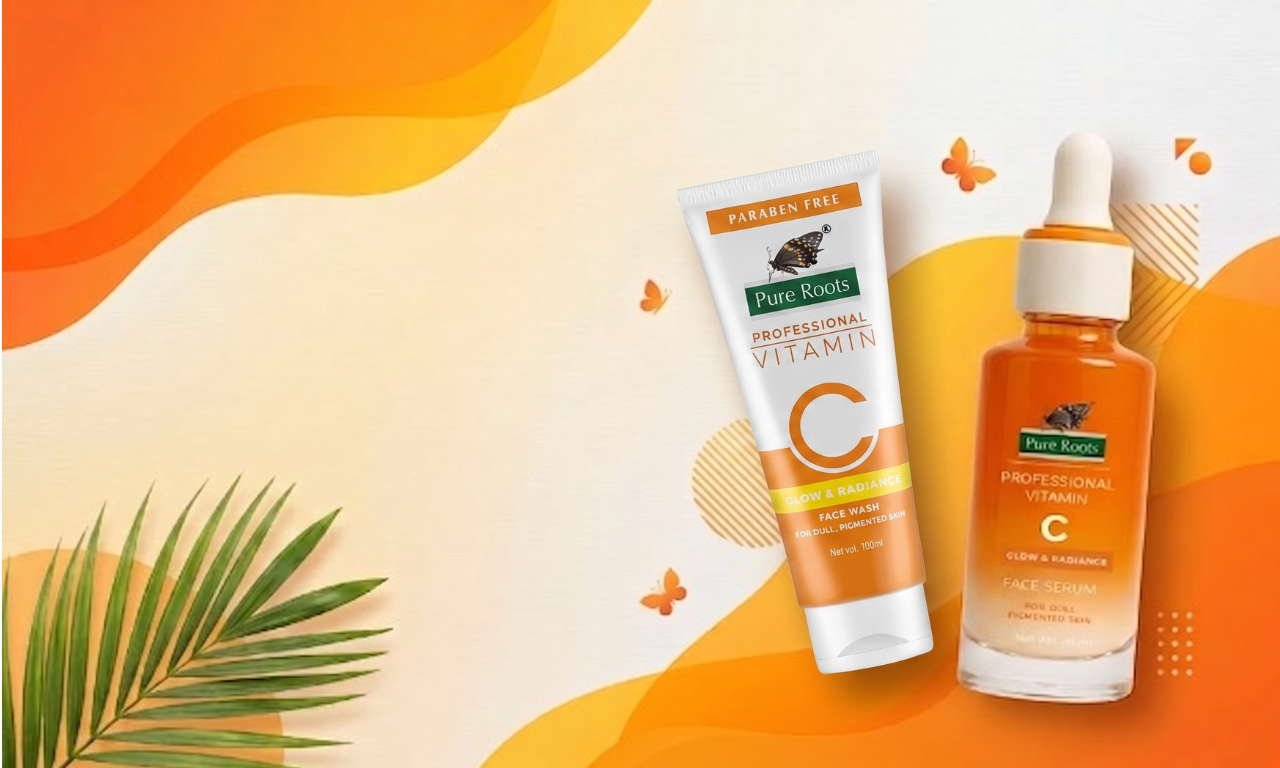
Pure Roots Herbals’ Vitamin C Trio – face wash, serum and cream – is a matched, paraben-free skincare set designed to work in this exact order. If you’ve been using Vitamin C products and seeing no results, it’s likely the sequencing, not the ingredient itself, that’s the problem. Sort the order. Correct the results.
Frequently asked questions
1. What Does Vitamin C Serum Do For The Face?
Vitamin C serum is beneficial to brighten the skin, reduce the appearance of dark spots, and improve overall skin tone. It’s a powerful antioxidant that protects the skin against free radical damage from pollution and UV exposure. Using Vitamin C serum regularly can also help to minimize fine lines and encourage firmer and healthier-looking skin by aiding collagen production.
2. Is vitamin C for skin whitening?
Vitamin C is not a skin whitening ingredient but it can help brighten the complexion and reduce hyperpigmentation. It works to prevent the production of excess melanin which can fade acne marks, sun spots and uneven skin tone over time. Vitamin C skincare products can help you achieve a more luminous, uniform and glowing appearance when used regularly.
3. Is it OK to use vitamin C face cream everyday?
Generally, vitamin C face cream is safe for daily use. Use daily to help hydrate skin while supporting a brighter, more even tone. Regular use can also protect skin from environmental stressors and boost the benefits of other Vitamin C skincare products like serums and face washes.
4. When should I use Vitamin C skin care products – morning or night?
Depending on your skincare routine, you can use your Vitamin C skincare products in the morning or at night. Using it in the morning is particularly helpful, as vitamin C helps shield the skin from free radicals from UV rays and pollution. For daytime use, apply a broad spectrum sunscreen over it to enhance protection and keep skin healthy looking.
5. If I use a serum, do I still need to use the Vit C cream?
Vitamin C serum provides the skin with concentrated active ingredients and Vitamin C cream helps to lock in moisture and support the skin barrier. The two products together can help to increase hydration and maximize the benefits of Vitamin C. If you have oily skin, you can choose a light moisturizer but skipping the cream can reduce the overall effectiveness of skincare.