
SPF 60 vs SPF 50: Which Sunscreen Is Better for Indian Weather?
-
admin
- Posted on
- 0 comments
Walk into any pharmacy or scroll through any beauty website today, and you’ll find sunscreen bottles boasting SPF numbers higher than ever before. SPF 30, SPF 50, SPF 60, even SPF 100 — the choices can feel overwhelming. But when it comes to India’s intense sun, humidity, and long outdoor hours, does a higher SPF actually make a meaningful difference? Let’s break down the real science behind Sunscreen SPF 50 and SPF 60, and figure out which one truly suits Indian weather conditions.
Understanding What SPF Actually Means
SPF, or Sun Protection Factor, measures how well a sunscreen protects your skin from UVB rays — the rays primarily responsible for sunburn. Here’s the part most people don’t realize: the difference between SPF 50 and SPF 60 is far smaller than the numbers suggest.
- SPF 50 blocks approximately 98% of UVB rays
- SPF 60 blocks approximately 98.3% of UVB rays
That’s barely a noticeable jump. What matters far more is UVA UVB Protection Sunscreen labeling, since UVA rays penetrate deeper into the skin and are responsible for premature aging, pigmentation, and long-term skin damage — issues that are especially common in India’s tropical, high-UV climate.
Why India’s Climate Demands More Than Just a High SPF Number
India experiences intense sunlight for most of the year, along with high humidity, pollution, and temperature extremes depending on the region. This means your sunscreen needs to do more than just block burning rays. It needs to:
- Offer broad-spectrum protection against both UVA and UVB rays
- Stay effective despite sweat and humidity
- Feel comfortable on the skin for hours at a stretch
- Not clog pores or leave a heavy residue in hot, sticky weather
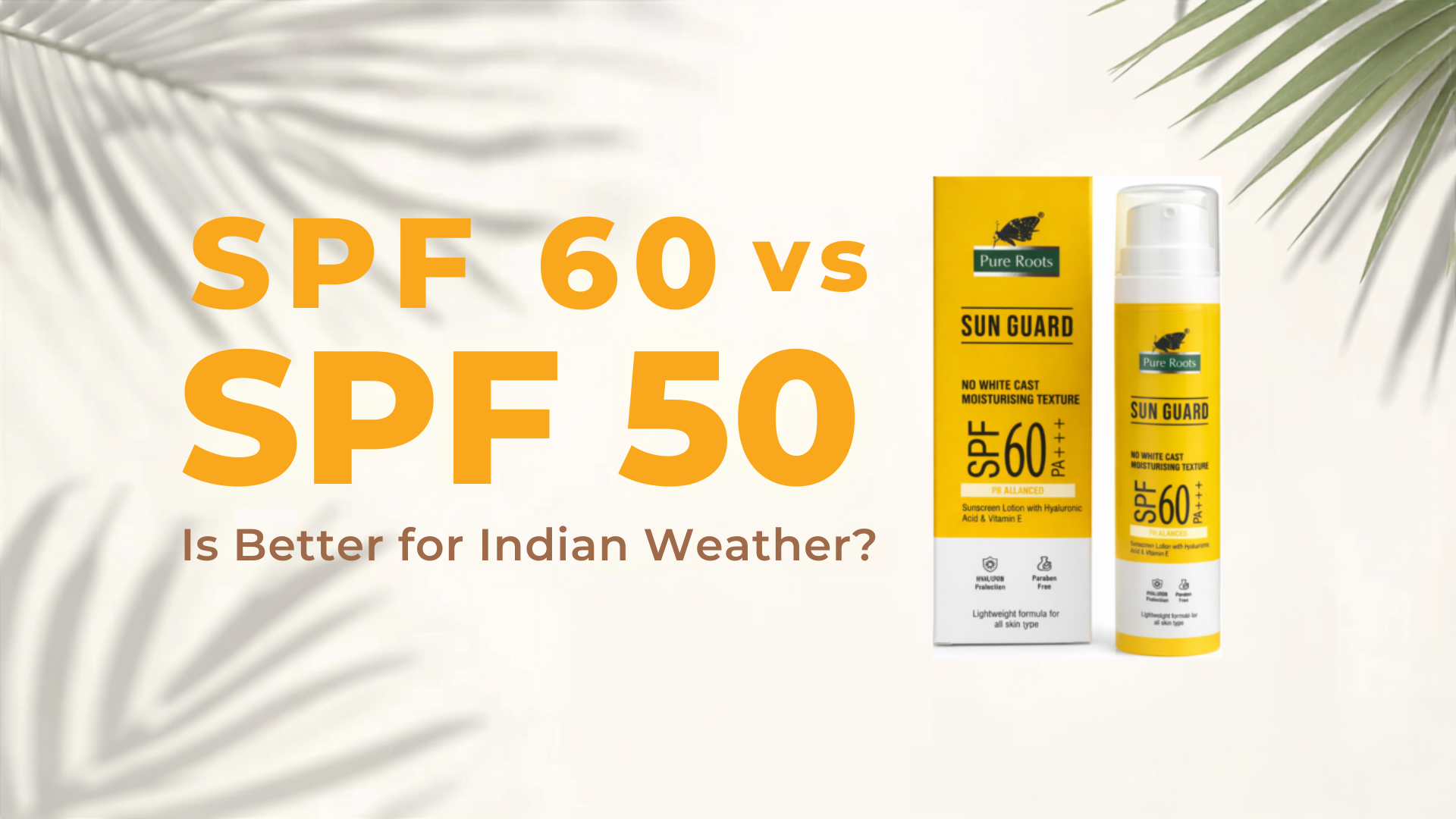
This is where the SPF 60 PA+++ Sunscreen rating becomes genuinely useful. The “PA” rating (Protection Grade) measures UVA protection specifically, and PA+++ indicates high UVA defense — critical for preventing tanning, dark spots, and early signs of aging caused by prolonged sun exposure.
SPF 50 vs SPF 60: The Real-World Difference
For most people living in Indian cities and towns, SPF 50 with a strong PA rating is more than sufficient for daily use — commuting, working near windows, or running errands. However, SPF 60 (or higher) becomes more relevant in specific situations:
- Extended outdoor activities like beach trips, trekking, or sports
- High-altitude locations where UV intensity increases
- People with fair or sun-sensitive skin
- Those with a history of pigmentation or melasma
That said, SPF alone isn’t the deciding factor. Reapplication frequency, the amount applied, and how well the sunscreen performs on your skin type matter just as much as the number on the bottle.
Texture Matters as Much as SPF
One of the biggest reasons people skip sunscreen in India is texture. A heavy, sticky formula in 40-degree heat is simply unbearable. This is why choosing a Non-Greasy Sunscreen or a Lightweight sunscreen formula is just as important as the SPF value itself.
Modern sunscreen formulations use gel-based or fluid textures that absorb quickly, leave no white cast, and don’t feel suffocating under humidity. If a sunscreen feels heavy or greasy, you’re far less likely to reapply it — which defeats the purpose of even the highest SPF rating.
Sweat, Swimming, and the Need for Water Resistance
Indian summers mean sweat — a lot of it. If your sunscreen washes off within an hour of stepping outside, even SPF 60 won’t protect you effectively. Look for a Water-resistant sunscreen that maintains its SPF rating for 40 to 80 minutes of sweating or swimming, as tested and labeled by the brand.
Water resistance doesn’t mean waterproof — no sunscreen is fully waterproof — but a good water-resistant formula significantly reduces the need for constant reapplication during outdoor activities, workouts, or a day at the pool.
Why Ingredient Safety Should Be Non-Negotiable
Beyond SPF and texture, the ingredient list deserves equal attention. Many sunscreens contain preservatives and chemicals that can irritate sensitive skin or cause long-term concerns with regular use. Opting for a Paraben-free sunscreen ensures you’re avoiding synthetic preservatives linked to hormonal disruption and skin sensitivity, making it a safer choice for daily, long-term application — especially important in a country where sunscreen often needs to be worn nearly every day of the year.
So, Which One Should You Choose?
For everyday Indian conditions, SPF 50 with PA+++ and broad-spectrum protection is generally sufficient for most skin types and routines. SPF 60 offers a marginal boost and can be a better fit for outdoor-heavy lifestyles, high-altitude travel, or those especially prone to sun damage.
Ultimately, the “better” sunscreen isn’t just about the SPF number — it’s about consistent use. A Lightweight sunscreen with Non-Greasy Sunscreen texture, solid Water-resistant sunscreen performance, and a Paraben-free sunscreen formula that you’ll actually enjoy reapplying will always outperform a high-SPF product left in a drawer at home.
Final Thoughts
Choosing between SPF 50 and SPF 60 shouldn’t be the only factor guiding your sunscreen decision. In India’s climate, broad-spectrum UVA-UVB protection, sweat resistance, breathable texture, and skin-safe ingredients matter just as much — if not more. Pick a formula that fits your lifestyle and skin type, apply it generously, and reapply every two to three hours when outdoors. That consistency is what truly protects your skin, regardless of whether the label says SPF 50 or SPF 60.
Frequently Asked Questions
1. Is SPF 60 significantly better than SPF 50 for Indian summers?
Not dramatically. SPF 50 blocks about 98% of UVB rays, while SPF 60 blocks around 98.3%. The difference is minor, so factors like broad-spectrum UVA-UVB protection and reapplication matter more than the SPF number alone.
2. What does PA+++ mean on a sunscreen label?
PA+++ indicates a high level of UVA protection. Since UVA rays cause tanning, pigmentation, and premature aging, choosing a sunscreen with a strong PA rating is just as important as choosing a high SPF.
3. How often should I reapply sunscreen in Indian weather?
Ideally, every two to three hours when outdoors, and immediately after excessive sweating or swimming, even if you’re using a water-resistant sunscreen.
4. Is a non-greasy or lightweight sunscreen less effective than a thicker formula?
No. Effectiveness depends on SPF, PA rating, and broad-spectrum coverage — not thickness. In fact, a lightweight, non-greasy sunscreen encourages more consistent daily use, which improves overall protection.
5. Why should I choose a paraben-free sunscreen?
Paraben-free formulas avoid synthetic preservatives linked to skin irritation and hormonal disruption, making them a safer option for sensitive skin and long-term daily use.