5 Skin Problems a Tea Tree Face Wash Can Solve
-
admin
- Posted on
- 0 comments
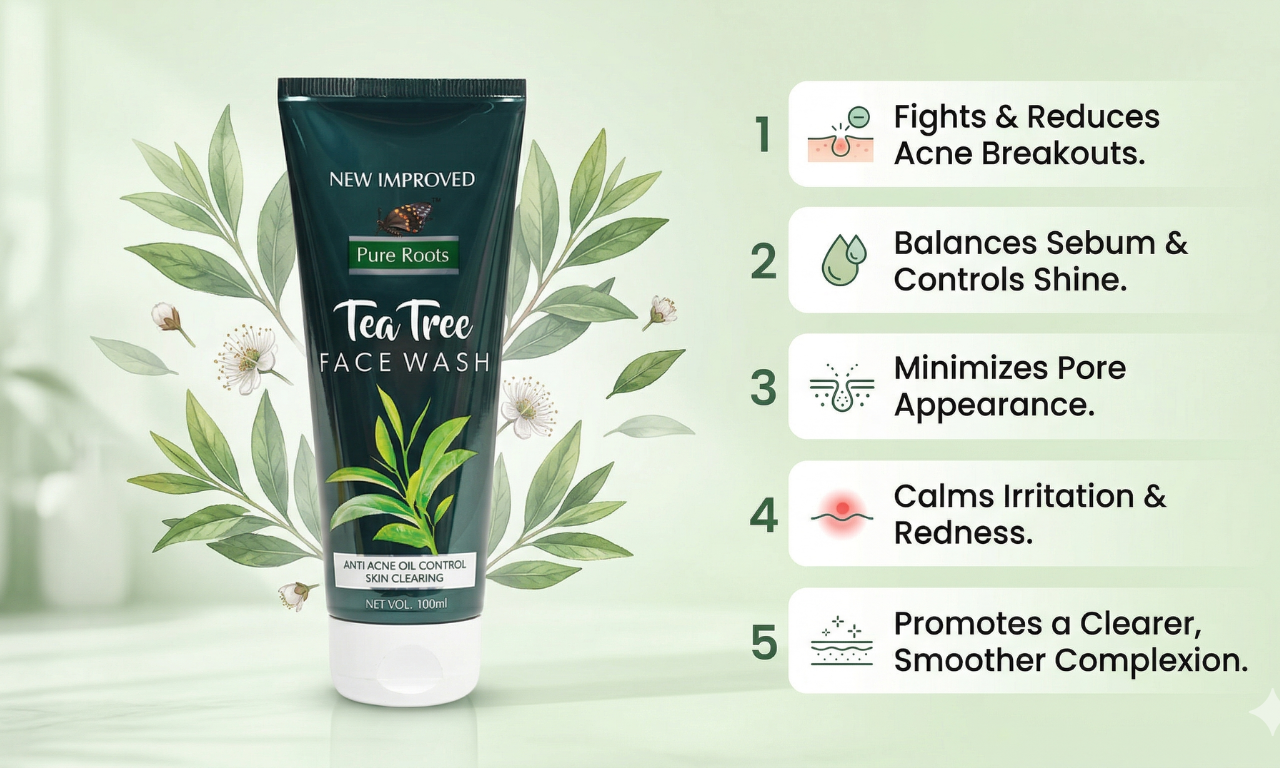
Most skincare routines fail for a simple reason: they treat symptoms, not causes. Breakouts, oiliness, redness—these are signals. Ignore the root, and the cycle repeats.
A tea tree face wash works differently. Powered by tea tree oil, a natural antibacterial, it targets the underlying triggers of common skin issues. Used right, it can simplify your routine and fix multiple problems at once.
Here are five skin concerns where a tea tree face wash actually earns its place.
1. Acne and Pimples
Acne isn’t just about clogged pores. It’s a mix of excess oil, bacteria, and inflammation. Most harsh cleansers strip your skin, which triggers even more oil production.
Tea tree oil works as a natural antibacterial agent. It helps reduce the acne-causing bacteria on your skin without completely drying it out.
What makes it effective:
- It targets bacteria linked to breakouts
- It calms redness and swelling
- It helps prevent new pimples from forming
Over time, consistent use can reduce both the frequency and severity of breakouts. It won’t act like a miracle overnight treatment, but it creates an environment where acne struggles to thrive.
2. Oily Skin and Excess Sebum
If your face looks greasy within hours of washing, your skin isn’t just “oily”—it’s overcompensating.
Many face washes try to fix this by aggressively removing oil. That backfires. Your skin responds by producing even more sebum.
Tea tree face wash helps regulate oil instead of stripping it.
Why it works:
- It gently removes excess oil without damaging your skin barrier
- It keeps pores clear, reducing buildup
- It maintains a balanced, matte finish for longer
The result is not dry skin—it’s controlled oil production. That difference matters.
3. Blackheads and Clogged Pores
Blackheads are oxidized oil trapped in your pores. Once they form, they’re stubborn.
A tea tree face wash doesn’t just clean the surface. It penetrates into pores and helps break down buildup.
Here’s how it helps:
- It clears dirt, oil, and impurities from pores
- It prevents buildup that leads to blackheads
- It refines the appearance of enlarged pores
Used daily, it reduces the chance of new blackheads forming. Pair it with occasional exfoliation, and results improve faster.
4. Skin Inflammation and Redness
Red, irritated skin often comes from inflammation, triggered by acne, pollution, or even harsh products.
Tea tree oil has natural anti-inflammatory properties. That makes it useful beyond acne.
What it does:
- Reduces visible redness
- Soothes irritated skin
- Supports faster recovery from breakouts
If your skin reacts easily or looks flushed after cleansing, switching to a tea tree-based face wash can help calm things down instead of making them worse.
5. Bacterial and Fungal Skin Issues
Not all breakouts are traditional acne. Some are caused by bacteria or even fungal overgrowth, especially in humid conditions.
This is where tea tree oil stands out.
Its antimicrobial properties help:
- Fight bacteria that trigger skin infections
- Control fungal growth linked to small, itchy bumps
- Keep skin cleaner in sweat-prone areas
If you’ve tried multiple products with little success, and your breakouts are uniform or itchy, this could be the missing piece.
How to Use a Tea Tree Face Wash (Without Ruining Your Skin)
Using the right product the wrong way cancels the benefits.
Follow a simple approach:
- Wash your face twice daily—morning and night
- Use lukewarm water, not hot
- Massage gently for 20–30 seconds
- Follow with a light moisturizer
Avoid overuse. More washing does not mean better skin. It usually means irritation.
Who Should Use It—and Who Shouldn’t
Tea tree face wash works best for:
- Oily and acne-prone skin
- Combination skin with frequent breakouts
- People dealing with clogged pores or blackheads
But it’s not for everyone.
Be cautious if:
- You have extremely dry or sensitive skin
- You’re allergic to essential oils
- Your skin barrier is already damaged
In those cases, start with limited use or consult a dermatologist.
What to Look for in a Good Tea Tree Face Wash
Not all products are equal. Many contain minimal tea tree oil but heavy chemicals.
Choose one that:
- Lists tea tree oil among the active ingredients
- Is free from harsh sulfates and alcohol
- Has a balanced pH
- Includes soothing ingredients like aloe vera or glycerin
A well-formulated product enhances the benefits without causing dryness.
The Bottom Line
A tea tree face wash is not hype—it’s a practical, multi-problem solution. It tackles acne, oiliness, clogged pores, inflammation, and microbial issues at the source.
That said, it’s not magic. Results come from consistency and pairing it with a basic, sensible routine.
Fix the cause, not just the symptom. Your skin reflects that choice.